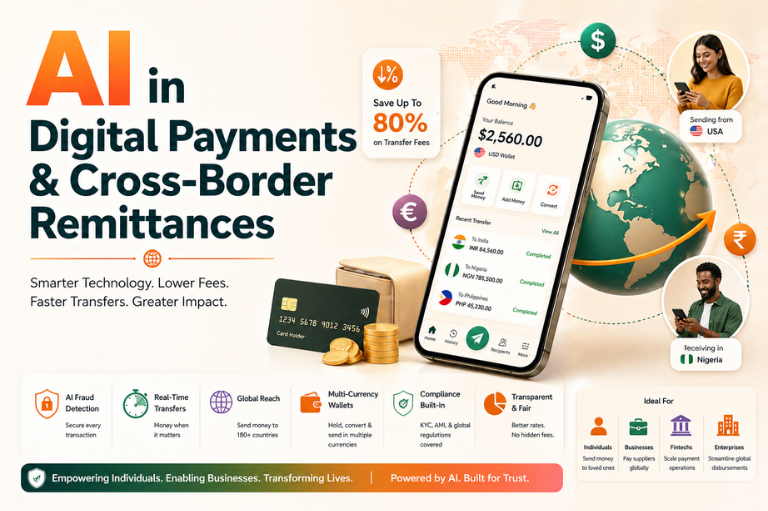
Digital payments cross-border remittances are still slow, expensive, and unreliable for millions of users in 2026.
A worker in Dubai sends money home to his family in Kerala every month. He walks to a money exchange, fills out a form, hands over cash, and pays a fee that takes a significant cut of what his family actually receives. The transfer takes two days.
A small business owner in Lagos needs to pay a supplier in the UK. Her bank wants three working days and charges a transfer fee she did not expect. The supplier is waiting.
A student in South Africa tries to pay an overseas tuition fee online. Her card is declined because the payment gateway does not support her bank.
These are not rare edge cases. For millions of people across Africa, South Asia, the Middle East, and Southeast Asia, sending and receiving money across borders is still slow, expensive, and unreliable.
At Infin Mobile Solutions, we build the digital payment and remittance systems that fix these problems. This article explains what is broken and how we help.

The Global Picture in 2026
The global digital cross-border remittance market is valued at $16.19 billion in 2026 and is projected to reach $97.85 billion by 2035, according to Business Research Insights. Over 4.8 billion people are now projected to use mobile wallets globally.
Yet despite all this growth, the G20’s own roadmap acknowledges that cross-border payments still face persistent problems with cost, speed, transparency, and access, according to The Payments Association’s February 2026 analysis. The infrastructure is expanding. The problems have not gone away.
The opportunity for businesses that get this right is enormous. The demand is there. The technology exists. What is missing is well-built, market-specific digital payments cross-border remittances.
Problems in Digital Payments Cross-Border Remittances:
Transfer Fees Are Still Too High
Sending money internationally through a traditional bank can cost between 5% and 10% of the transfer amount.
For a worker sending $300 home, that could mean $15 to $30 disappearing in fees. Multiply that across twelve months and the loss is significant. The United Nations has a target to bring remittance costs below 3% by 2030. Most traditional providers are still far from that.
Transfers Take Too Long
A bank wire transfer can take two to five business days. For a family waiting on money to pay rent or school fees, that delay is not a minor inconvenience.
Even digital providers sometimes take hours when the recipient’s bank is in a different payment network. Real-time is becoming an expectation. Most systems still cannot deliver it consistently.
The Recipient Cannot Always Access the Money
Millions of people in high-remittance markets like Nigeria, Ghana, India, and Pakistan do not have bank accounts. If a digital remittance requires the recipient to have a bank account, a large portion of the intended beneficiaries are immediately excluded.
Cash pickup networks exist, but they add steps, fees, and friction that digital systems were supposed to eliminate.
Hidden Fees and Poor Exchange Rates
A sender sees a low transfer fee advertised. They do not notice that the exchange rate applied is significantly worse than the market rate. The difference disappears into the provider’s margin.
This lack of transparency is one of the most common complaints from remittance senders. They feel misled, even when nothing illegal has occurred.
Payment Failures With No Clear Explanation
70% of US firms experienced higher rates of failed payments in cross-border transactions than in domestic ones, according to cross-border payment statistics compiled by Andersen. Faulty payments cost US merchants at least $3.8 billion in sales in a single year.
Failed transactions frustrate customers, damage business relationships, and drive users to competitor platforms. Most businesses have no system in place to predict or prevent them digital payments cross-border remittances

Fraud and Unauthorised Transactions
Digital payment systems are a primary target for fraud. Phishing attacks, account takeovers, fake payment confirmations, and social engineering scams are all common.
Many smaller fintech platforms and regional payment providers do not have sophisticated fraud detection systems. By the time suspicious activity is identified, the damage is done.
Compliance Is Complex and Constantly Changing
Every country has its own rules for KYC, AML, and cross-border transaction reporting. A payment platform operating across multiple markets has to navigate a different regulatory framework in each one.
Getting this wrong does not just mean a fine. It can mean losing the licence to operate entirely.
Poor User Experience Drives Abandonment
A user starts a payment on a poorly designed platform. The form is confusing. The verification step fails twice. They give up and go elsewhere.
In digital payments, user experience is not a nice-to-have. It is the product. A platform that is difficult to use does not get a second chance.
How Infin Mobile Solutions Helps: Digital Payments Cross-Border Remittances Solutions
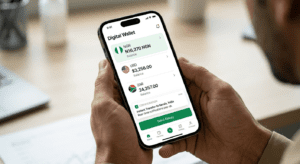
Digital Wallet Systems
We build multi-currency digital wallets that let users store, send, and receive money in multiple currencies from a single account.
Users can top up via bank transfer, card, or cash agent. They can send to another wallet user instantly or initiate a bank transfer. Balances update in real time and the full transaction history is available at any point.
- Multi-currency balance management in a single interface
- Instant wallet-to-wallet transfers with zero or near-zero fees
- Bank transfer and card top-up options
- Transaction history and statements available on demand
- Biometric login and two-factor authentication for every account
Cross-Border Remittance Platforms
We build remittance systems specifically designed for high-volume corridors. UAE to India. Nigeria to the UK. South Africa to Zimbabwe.
Each corridor has its own regulatory requirements, preferred payment methods, and recipient infrastructure. We build for the specific corridor, not a generic template.
- Competitive exchange rate display before the transfer is confirmed
- Full fee transparency: sender sees exactly what the recipient will receive
- Bank deposit, mobile wallet, and cash pickup delivery options for recipients
- Real-time transfer status notifications for sender and recipient
- Scheduled and recurring transfer options for regular remittance senders
Payment Gateway Integration
We build and integrate payment gateways for businesses that need to accept payments from customers across multiple countries.
A business in Nigeria accepting payments from customers in the UK, UAE, and India needs a gateway that handles different currencies, different card networks, and different local payment preferences. We build that infrastructure.
- Support for major card networks and local payment methods
- Multi-currency checkout with live exchange rate display
- Reduced payment failure rates through intelligent routing
- Detailed transaction reporting and reconciliation dashboards
- Seamless checkout experience on any device
Merchant Payment Systems
We build merchant-facing payment systems for businesses that operate in physical and digital environments.
QR code payments, tap-to-pay, payment links, and online checkout are all supported within a single merchant account. The merchant sees all transactions in one place regardless of how the payment was made digital payments cross-border remittances
- QR code payment generation for in-store use
- Tap-to-pay support for NFC-enabled devices
- Payment link generation for remote invoicing and online sales
- Single dashboard for all transaction types
- Instant settlement notifications and end-of-day reports
KYC and Compliance Infrastructure
We build the identity verification and compliance systems that payment platforms need to operate legally across multiple markets.
Every user is verified at onboarding. Transaction monitoring runs continuously. Suspicious activity is flagged automatically and reported where required. The compliance infrastructure grows with the platform.
- Digital identity verification at onboarding using ID documents and facial recognition
- AML transaction monitoring with automated alert generation
- Sanctions and PEP screening on every new account
- Regulatory reporting tools for each operating jurisdiction
- Full audit trail for every transaction and compliance decision
Fraud Detection and Prevention
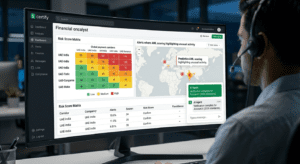
We build fraud detection systems that monitor every transaction for suspicious patterns. Device fingerprinting, behavioural analysis, and velocity checks work together to identify unusual activity.
When something looks wrong, the transaction is flagged, the user is notified, and the platform’s risk team is alerted in real time. The system learns from every incident it encounters.
- Real-time transaction monitoring on every payment
- Device and behavioural pattern analysis
- Velocity checks to detect rapid repeat transactions
- Instant alert to user and risk team when fraud is suspected
- Account lockout and recovery flow for compromised accounts
AI in Digital Payments Cross-Border Remittances:
AI does not change what a payment system needs to do. It changes how well it does it.
The clearest example is fraud detection. A rule-based system blocks transactions above a certain amount or from certain locations. It misses the coordinated low-value attack that never triggers any single rule. AI monitors behaviour patterns, not just individual transactions, and identifies the attack as it forms.
AI also improves the user experience. Smart KYC systems that read identity documents automatically complete in seconds what previously required manual review and took days. Users get approved faster. Fraudulent applications are caught earlier.
For businesses, AI turns transaction data into insight. Which corridors are most active or users are most likely to churn? Or merchants have the highest failure rates? These are questions a payment platform generates data to answer. AI makes those answers accessible without requiring a data science team to extract them.
We integrate AI where it adds real, measurable value. Not as a feature, but as the infrastructure that makes the product work better.
The Markets We Build For
Infin Mobile Solutions builds payment and remittance systems for markets where the need is greatest and the existing infrastructure is most fragmented.
Digital payment adoption is accelerating in Nigeria. However, fraud remains widespread and regulatory requirements are strict.
Meanwhile, the UAE handles one of the highest-volume remittance corridors to South Asia. Even so, many workers still rely on slow and expensive traditional services.
South Africa presents a different challenge. Financial inclusion is still limited despite high mobile penetration in the market.
India, on the other hand, has advanced real-time payment infrastructure domestically. However, cross-border payments are still catching up.
Each of these markets needs solutions built for its specific conditions. Not adapted from a product designed for the UK or US. Built from the ground up with local payment preferences, local compliance requirements, and local user behaviour in mind.
Moving Money Should Not Be This Hard
For most people sending money across borders, the experience in 2026 is still slower, more expensive, and more uncertain than it should be. That is not a technology problem. Technology that can fix it exists. It is a delivery problem. The right systems have not reached the right markets.
Infin Mobile Solutions builds those systems. Digital wallets, remittance platforms, payment gateways, merchant payment tools, fraud detection, and compliance infrastructure — built for the markets that need them most,digital payments cross-border remittances
If you are building a payment platform, a remittance service, or a fintech product and want a development partner who understands these markets, we would like to hear from you.
Contact Infin Mobile Solutions at infinmobile.com/contact-us and we will take it from there.
Frequently Asked Questions
What is a cross-border remittance system?
A cross-border remittance system is a digital platform that allows individuals or businesses to send money from one country to another. It handles currency conversion, regulatory compliance, identity verification, and delivery to the recipient’s bank account, mobile wallet, or cash pickup location.
Why are cross-border transfer fees still so high?
Traditional transfer fees are high because the correspondent banking system involves multiple intermediary banks, each taking a margin. Currency conversion adds another layer of cost. Many digital providers have reduced these fees significantly, but the average global remittance cost still sits above the UN’s 3% target for 2030.
What is a digital wallet and how does it work?
A digital wallet is an account that stores money electronically. Users can add funds via bank transfer or card, send money to other users instantly, pay merchants, or withdraw to a bank account. Multi-currency wallets hold balances in different currencies simultaneously, making them useful for cross-border transactions.
How does fraud detection work in a digital payment system?
Fraud detection monitors every transaction for unusual patterns. It checks device fingerprints, transaction amounts, locations, timing, and behavioural patterns. When a combination of signals indicates potential fraud, the transaction is flagged, the user is notified, and the risk team is alerted. The system learns from each incident to improve future detection.
What compliance requirements do digital payment platforms need to meet?
Digital payment platforms typically need to comply with KYC requirements for customer identity verification, AML regulations for transaction monitoring and suspicious activity reporting, and local financial licensing requirements in each market they operate in. Requirements vary significantly by country and are updated regularly.
How do I find out what it would cost to build a digital payment system?
Every payment platform has different requirements depending on the markets, corridors, features, and compliance obligations involved. Contact Infin Mobile Solutions at infinmobile.com/contact-us with your requirements and we will provide a clear assessment within 48 hours.